Our Locations
Kitchener
Email For Us
info@kwicphysiotherapy.com
Save you from pain
548 889 3432

If you are asking this, you are trying to sort out two things at once: why your ankle hurts and what will actually help it stay better. I usually frame it like this. A physiotherapist treats the ankle as a moving system — pain, swelling, strength, balance, range of motion, and how you recover after an injury. A pedorthist focuses on the shoe-foot interface — load, alignment, and whether footwear or orthotics can reduce stress through the foot and ankle.
For many people in Kitchener, Waterloo, Cambridge, Guelph, and the wider KW region, the best answer is not either/or. It is often both. If the ankle is irritable, weak, and unstable, I want rehab. If your foot mechanics are adding repeated strain, I want better footwear support. Change only the insole and the ankle can stay weak; do only the exercises and poor loading keeps irritating the tissue.
Ankle pain is not one diagnosis. It can come from a fresh sprain, an old ligament injury, tendon overload, joint stiffness, impingement, arthritis, or a foot problem that is forcing the ankle to compensate. The first thing I want to know is simple: what happened, how long ago, and what makes it worse?
If pain started after a roll or twist, especially with swelling, bruising, or trouble bearing weight, physiotherapy is usually the right first step. Early care helps you calm the joint down, restore walking, and avoid the cycle of “it feels a bit better, so I return too soon, and then it flares again.” If pain builds gradually with standing, running, long shifts, or poor shoe support, I also think about pedorthic input, especially when arch support, cushioning, or a custom orthotic may reduce repeated strain.
In the KW region, plenty of patients try to “push through” ankle pain to keep working or stay active around Kitchener-Waterloo. That instinct can turn a manageable problem into a stubborn one. The goal is not just symptom relief — it is getting you back to normal loading.
Chronic ankle instability is the pattern I hear most often as “my ankle just doesn’t trust me.” People describe repeated rolling, a feeling of wobbliness, hesitation on uneven ground, or episodes where the ankle gives way even during ordinary walking. That usually follows a prior sprain, especially if rehab was never completed.
The APTA Clinical Practice Guidelines for lateral ankle sprains (Martin et al., 2021) are very clear about this. They support early functional treatment, progressive exercise, balance and neuromuscular training, and a graded return to activity. The message is not “rest forever.” The message is “restore motion, strength, and control so the ankle can tolerate load again.”
When I assess chronic instability, I do not only ask whether the ligament was torn. I want to know whether the ankle dorsiflexes well, whether the calf is strong, whether the peroneals react quickly enough, and whether the person has regained trust in the joint. A brace or orthotic may help the ankle feel safer, but the long-term fix is usually skill retraining: balance, hopping, landing, and single-leg control.
One of the best-known tools for ankle rehab is the Star Excursion Balance Test (SEBT). Research on the SEBT shows it is useful for identifying dynamic balance deficits and lower-limb control problems, especially in people with a history of ankle sprain. I use that idea all the time, even when I am not running the full formal test.
It matters because instability is rarely just about pain — it is about controlling your body when the ground is unpredictable. The SEBT challenges balance, hip control, ankle proprioception, and trunk stability at once, and the weakest direction tells me where rehab should focus. In plain terms: if you cannot balance well on one leg, your ankle has not finished relearning how to protect you.
A pedorthist is valuable when the ankle problem is being fed by the way your foot meets the ground — a very flexible flat foot, a high arch, a forefoot issue, or footwear that is simply not supporting your load. For some people, a custom orthotic helps distribute pressure more evenly and reduces strain through the plantar fascia, the arch, and the ankle.
This is where the Cochrane review on orthoses for plantar fasciitis is helpful. The review found that orthoses can improve pain and function for some people, but they are not the same for every foot and work best when matched to the person, the shoe, and the activity. They are one part of treatment, not the entire plan.
I often recommend pedorthic assessment when ankle pain is tied to recurrent plantar fasciitis, overuse through standing work, or a foot shape that keeps driving the ankle into poor positions. The right orthotic will not “strengthen” the ankle, but it can reduce the daily compensating your tissues have to do.
If that sounds like you, physiotherapy is usually the best starting point. I can help settle pain, guide loading, check strength, and build balance and sport-specific control. For many people in Waterloo and Kitchener, this is the fastest way from “protecting the ankle” to “using it normally again.”
A pedorthist is often a strong choice when the foot itself is part of the driver. In Cambridge and Guelph, I see plenty of people who need orthotic support simply because they are on their feet all day in shoes that are not helping.
Some of the best outcomes happen when physiotherapy and pedorthics work together. A pedorthist helps control mechanical stress, while physiotherapy rebuilds the ankle’s ability to tolerate stress. That combination is especially useful if you have chronic ankle instability plus flat feet, recurring plantar fasciitis, or pain that flares every time you return to activity. The orthotic changes the starting position; the rehab changes the control system. At KWIC Physiotherapy, I like a plan that addresses both.
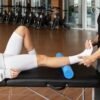
For an ankle problem, good rehab is usually not just a few resistance-band exercises. It should include:
The APTA guideline supports this approach because it matches what injured ankles actually need: to regain motion, tolerate force, and react automatically under pressure. That takes practice, not just time.
If your ankle hurts because it is weak, stiff, or repeatedly sprained, start with physiotherapy. If it is being overloaded by foot mechanics, shoes, or arch support issues, a pedorthist may help a lot. If you have both instability and poor load distribution, combine them. That is often the most efficient route back to walking comfortably, working full shifts, and getting back to sport in the KW region. My job is to help you understand what is actually driving the pain — once we know that, the plan becomes much clearer, and you do not need to guess your way through ankle rehab.
If your ankle is still painful, unstable, or never quite recovered after a sprain, book an assessment at KWIC Physiotherapy Kitchener. We serve Kitchener, Waterloo, Cambridge, Guelph, and the wider KW region with practical ankle rehab and guidance on whether you also need pedorthic support.
If the main issue is pain, swelling, weakness, stiffness, or repeated sprains, start with physiotherapy. If the issue is clearly tied to foot shape, shoe wear, or load through the foot, a pedorthist may help. Many people need both for the best result.
Yes, sometimes. Orthotics can improve support and reduce mechanical stress, especially when flat feet or poor foot mechanics are contributing. But orthotics do not replace balance and strength rehab.
The Martin et al. (2021) guideline supports early functional treatment, progressive exercise, balance training, and a graded return to activity. It emphasizes restoring motion and control rather than simply resting the ankle.
The SEBT helps us see how well you control your body on one leg. It is useful for spotting balance deficits after ankle sprain and for planning rehab that targets the right weakness.
It can be. Foot pain changes the way you walk, and that can irritate the ankle. If plantar fasciitis and ankle pain happen together, a pedorthist may help with load management and orthotic support.
If your ankle repeatedly gives way, feels unreliable on uneven ground, or limits sport and daily activity, it is worth getting assessed. Chronic instability should not be ignored.
A brace can help in the short term, especially during activity, but it does not restore strength or balance. I usually treat bracing as support, not as the whole solution.
That depends on the injury, how long it has been going on, and whether you have chronic instability. Some people improve in a few weeks; others need several months of progressive rehab.
Not always, but custom orthotics can be helpful when your foot mechanics are more complex or when a store-bought insert has not solved the problem. A pedorthist can help decide what level of support makes sense.
Absolutely. Even long-standing ankle instability can improve with targeted balance, strength, mobility, and loading work. I see this all the time in patients from Kitchener-Waterloo and beyond.
Shawn Master, C.Ped(C) — Certified Pedorthist
Custom Orthotics | Footwear Assessment | Biomechanical Analysis | Ankle Stability
Shawn Master is a Canadian Certified Pedorthist with expertise in biomechanical gait analysis, custom orthotic fabrication, and footwear prescription. He works collaboratively with physiotherapists at KWIC to address ankle instability, plantar fasciitis, and lower limb conditions across the Kitchener, Waterloo, Cambridge, and Guelph region.
Aaditya Shastri, PT — Registered Physiotherapist & Co-Owner
Orthopaedic Physiotherapy | Acupuncture | Ankle Rehabilitation
Aaditya Shastri is a co-owner and physiotherapist at KWIC Physiotherapy in Kitchener, specializing in lower limb rehabilitation and acupuncture-integrated care. He partners with pedorthists to deliver combined orthotic and exercise-based treatment plans for patients with chronic ankle instability, flat foot, and post-sprain rehab in Waterloo Region.